ServicesSiding Installation
Siding Installation in Spartanburg
We install fiber cement, vinyl and engineered wood siding with the water-management details done first: lapped housewrap, flashed windows, kickout flashing and correct nailing. The cladding you see is the last layer. The parts underneath decide whether your walls stay dry.
What Siding Actually Has to Do
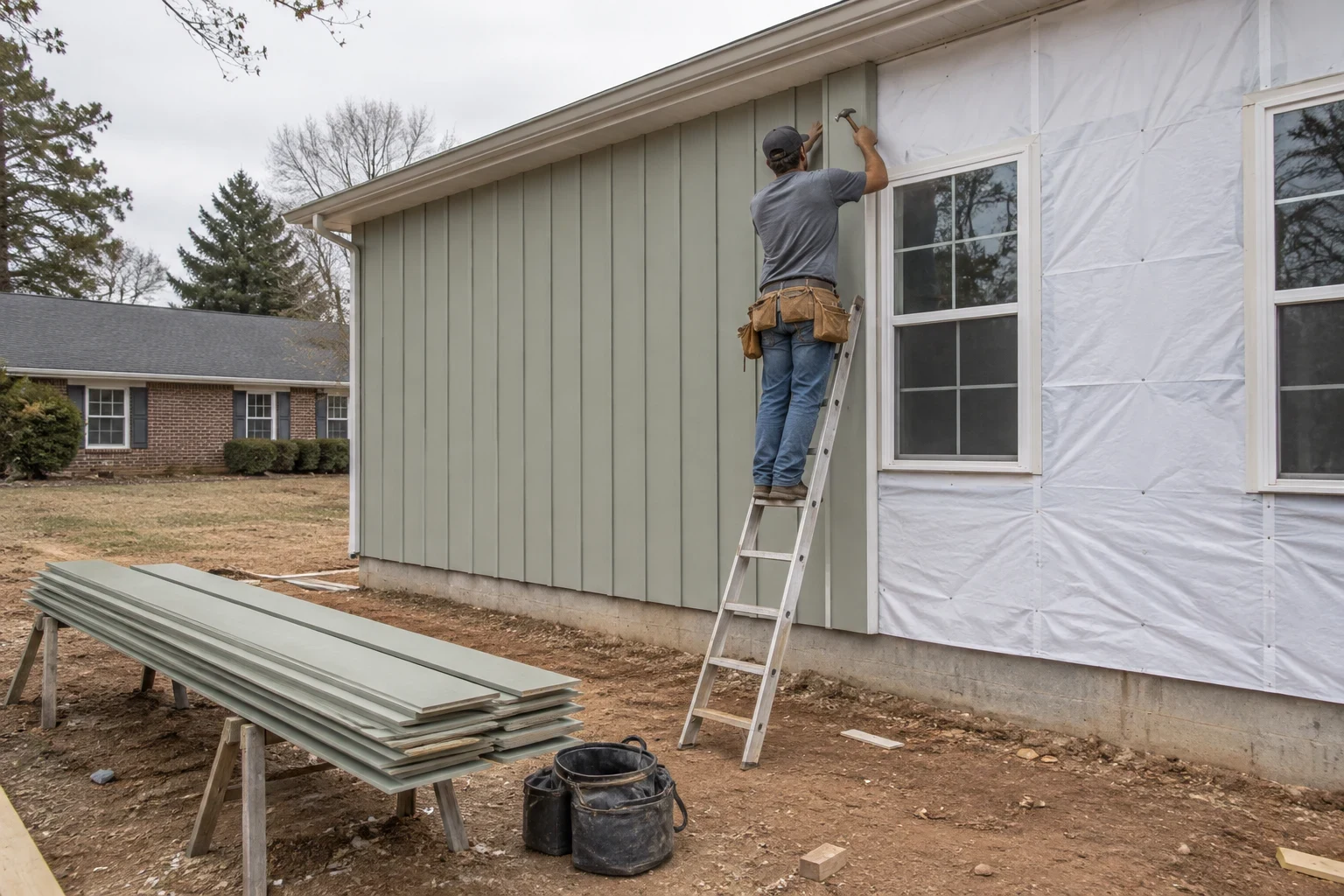
Siding is not waterproof. Wind-driven rain gets behind every type of cladding, so the job is to let that water drain out before it reaches the sheathing and framing. That depends on a water-resistive barrier lapped like shingles, flashing at every opening and joint, and clearances that keep the bottom edge away from soil and roof surfaces.
Most siding failures we see come from those details being skipped, not from bad product. A missing kickout flashing can rot a wall corner in a few years. Vinyl nailed too tight buckles in the first hot summer. We install to the manufacturer's written instructions and explain what we are doing as we go, so you know what is behind your walls.
We handle full re-siding on existing houses and siding on new builds. If you are planning a larger exterior change, this work often pairs with Home Remodeling or Custom Home Building.
What Our Siding Installation Includes
- 01
Tear-off and sheathing inspection
We remove the old siding and look at the sheathing before anything new goes on. Soft or stained OSB and plywood get photographed and shown to you. We replace damaged sections instead of covering them.
- 02
Water-resistive barrier
Housewrap goes on from the bottom up so each course overlaps the one below. Seams are taped, and the wrap tucks behind flashing rather than over it, so water is always directed outward.
- 03
Window, door and roofline flashing
Openings get sill pans, flashed jambs and head flashing that laps over the trim. Where a roof meets a sidewall, we install step flashing and a kickout at the bottom to throw water into the gutter instead of down the wall.
- 04
Correct fastening for the material
Vinyl is hung, not pinned. Nails go in the center of the slot with a small gap under the head so panels can move with heat. Fiber cement and engineered wood are nailed to the spacing and edge distances the manufacturer specifies, with joints flashed behind.
- 05
Trim, caulking and cleanup
Corners, frieze boards and trim are fitted and sealed only where sealant belongs, since caulking a drainage gap traps water. We run magnets for nails and haul off old material before we leave.
Questions about Siding Installation?
Call(864) 400-5195Signs Your Siding Needs Replacing
Soft spots or swelling
Press on boards near the ground and under windows. Give or swelling usually means water has been sitting behind the cladding and the sheathing may be damaged.
Buckled or wavy vinyl
Panels that ripple in the afternoon sun were often nailed too tight. They can pull loose in high wind and let rain in behind them.
Stains below roof-wall corners
Dark streaks or peeling paint where a roof edge meets a sidewall point to missing kickout flashing. This is one of the most common hidden rot spots.
Cracked or delaminating boards
Older hardboard and some engineered products swell and flake at the edges once the paint fails. Once the core takes on water, painting will not stop it.
Moisture or mold inside
Musty smells or peeling drywall on exterior walls can trace back to a leak at the siding or flashing. We check the wall from the outside to find the source.
How a Siding Job Runs
- 1
Project consultation
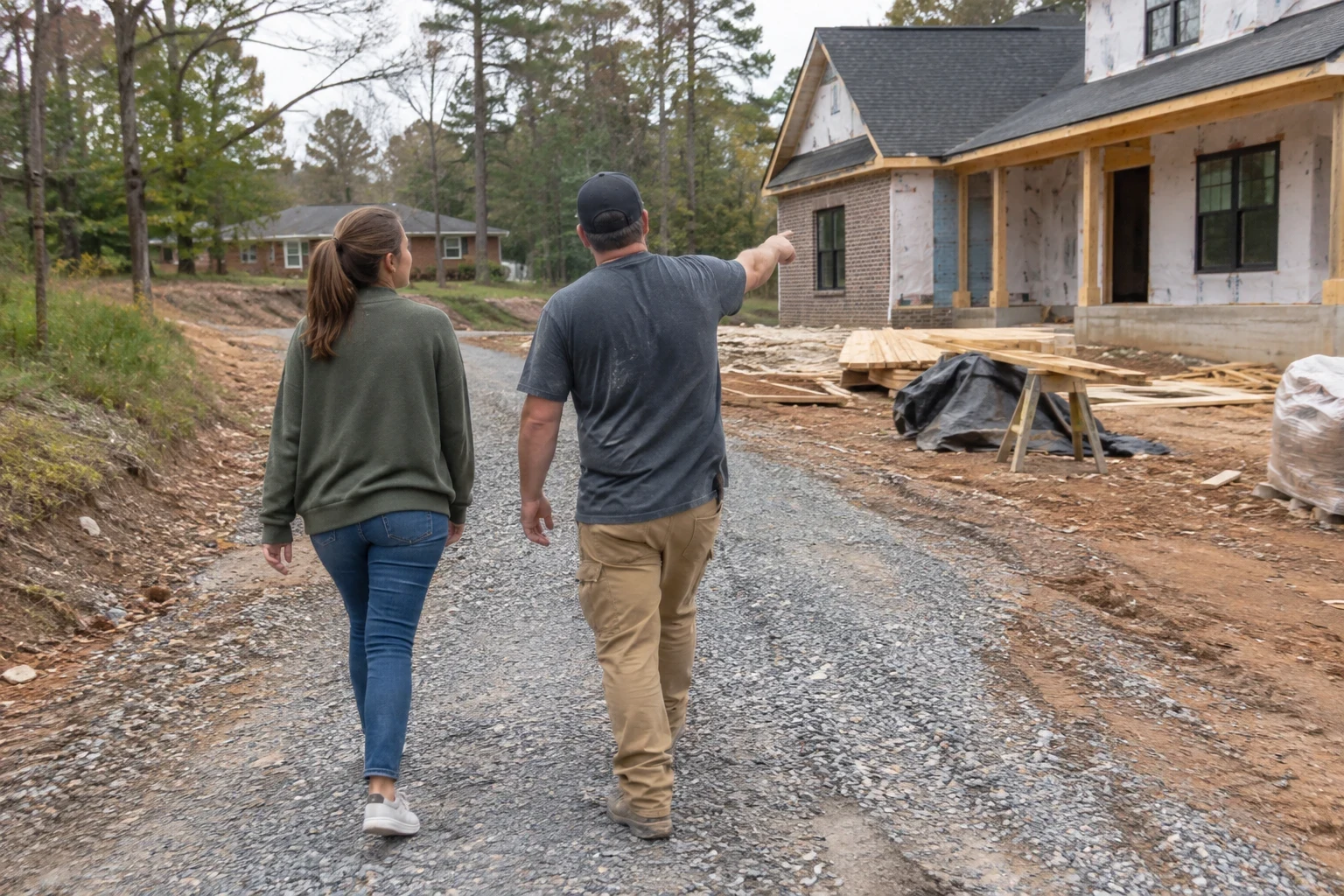
We walk the exterior with you, look at trouble spots and talk through material choices. You get a clear explanation of what we found and what we would do about it.
- 2
Written scope and material plan
We put the scope in writing: material, color, trim profile, flashing details and how we will handle damaged sheathing if we find it. That way the unknowns are discussed before the work starts.
- 3
Prep and protection
We cover plants, set tarps along the foundation and move outdoor items away from the walls. One elevation at a time is opened up so your house is not left exposed overnight.
- 4
Install, wall by wall
Barrier, flashing, starter strip, siding and trim go on in order on each side. We check courses for level and laps for consistent exposure as we go.
- 5
Walkthrough and cleanup
We walk the finished exterior with you, point out the flashing now hidden behind the cladding, and clear the yard of debris and fasteners.
What Moves the Cost of New Siding
Siding is priced by wall area, but area is only part of it. The material, the shape of the house and what we find under the old cladding all change the number. We explain each line in your estimate so you can see where the money goes.
- Material choice
- Vinyl, engineered wood and fiber cement differ in material cost and in labor. Fiber cement is heavy, needs dust-controlled cutting and takes more time to install and finish.
- Wall complexity
- Gables, dormers, bump-outs and many windows mean more cuts, more flashing and more trim. A simple two-story box goes faster than a house with lots of corners.
- Condition of the sheathing
- Rotted sheathing or framing found during tear-off has to be repaired before new siding goes on. We show you photos and agree on that work before doing it.
- Height and access
- Tall walls, steep slopes against the foundation and tight side yards may need scaffolding or lifts, which adds setup time.
- Trim and accent work
- Wider trim boards, shake gables, board-and-batten sections and soffit or fascia replacement all add to the scope.
Siding Installation Questions
Which siding material holds up best here?
Fiber cement handles heat, humidity and moisture well and resists insects, but it costs more to install. Good vinyl is lighter and needs little upkeep if it is hung correctly. Engineered wood gives a wood look with less weight than fiber cement. We match the choice to your house, budget and how much maintenance you want.
Can you put new siding over the old siding?
We generally do not recommend it. Covering old siding hides the sheathing, so rot keeps spreading unseen, and it makes proper flashing at windows and doors nearly impossible. Tear-off lets us fix problems and build the water barrier correctly.
How long will my house be torn up?
It depends on size and complexity, but we work one side at a time and close each wall back up before moving on. You can stay in the house throughout. Expect noise during the day and some activity around the yard.
Do you replace windows or trim at the same time?
Siding is the best time to address window flashing, since the openings are exposed. We replace trim, soffit and fascia as part of the siding scope when needed. If you are planning larger changes to the house, we can plan that through Home Remodeling.
Why does flashing matter so much if the siding looks fine?
Siding can look perfect while water runs behind it at an unflashed window head or roof-wall corner. That water soaks the sheathing and framing where you cannot see it. Flashing is a small part of the job that decides how long the wall lasts.
Get Your Siding Plan Started
Tell us about your house and what you are seeing on the walls. On the call we will set up a project consultation, look at the exterior in person and walk you through materials and how each wall will be put together.