ServicesGrading
Grading in Spartanburg
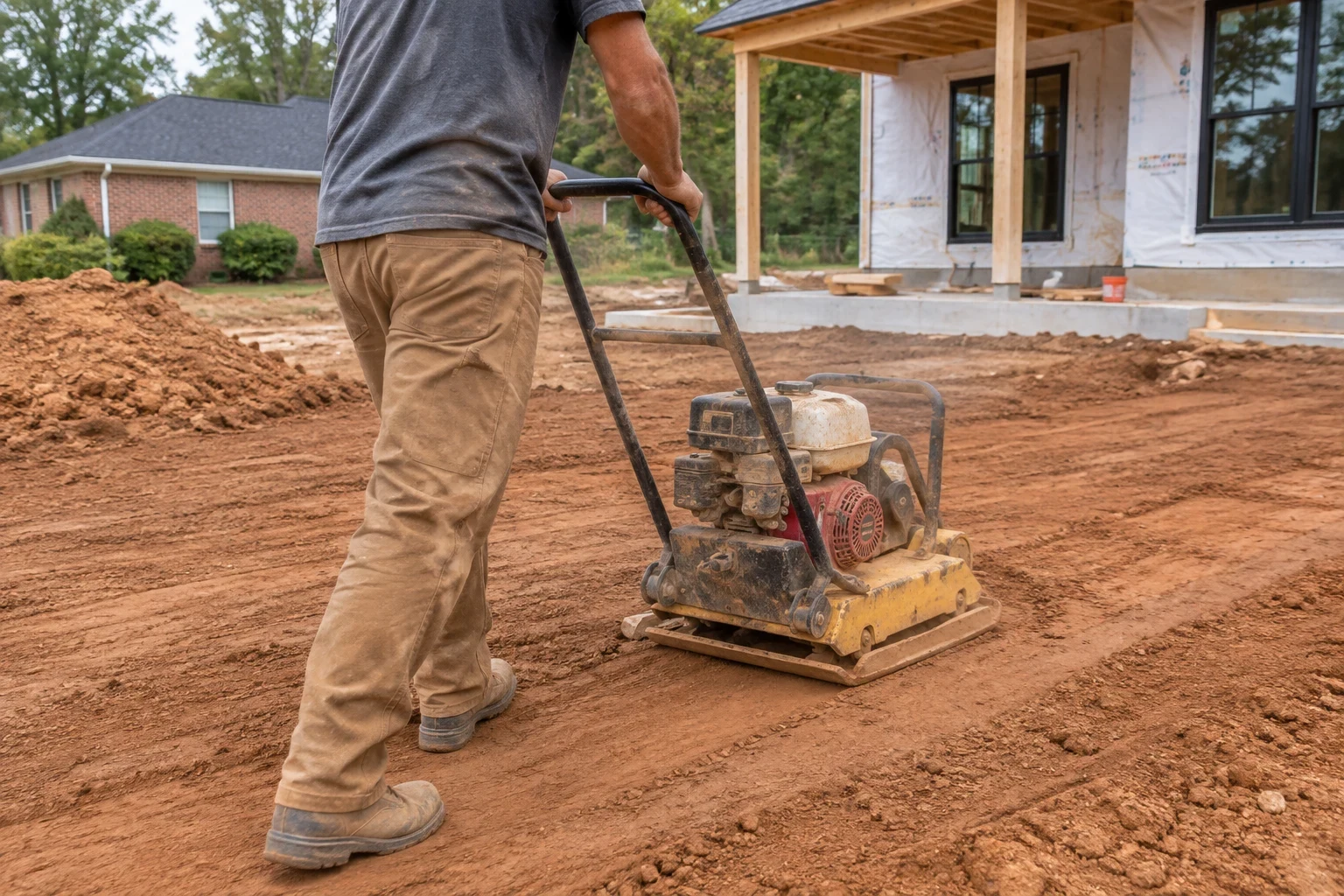
We shape your lot so water runs away from the foundation, not toward it. That means a building pad compacted in thin lifts, a measured slope off every wall and swales that carry runoff where it can drain. Done right, the ground under your home stays put.
What grading does and when you need it
Grading is the work of moving soil to set elevations on a lot. Rough grading builds the pad a new foundation sits on and roughs in the drainage pattern. Finish grading comes later, after the foundation and framing, and sets the final slope that topsoil and landscaping follow.
Most grading problems trace back to two shortcuts: fill dumped in one thick layer and never properly compacted, and a yard that ends up flat or tilted toward the house. Loose fill settles for years, and water that sits against a foundation wall finds every crack. Our clay soils make both worse, because clay holds water and swells when wet.
We grade for new custom home builds, for additions and remodels that change the footprint, and for existing homes where water keeps showing up where it should not. If you are starting from raw ground, grading usually follows our land clearing work and comes before foundation work.
What our grading work includes
- 01
Topsoil stripping and stockpiling
We scrape the organic topsoil off the work area and pile it separately. Topsoil is too soft and spongy to build on, but it is exactly what you want back on top at the end for grass and planting.
- 02
Building pad in compacted lifts
Fill goes down in layers of roughly six to eight inches, and each layer is compacted before the next one goes on. Thin lifts let the roller reach the full depth, so the pad does not keep settling under the slab or footings.
- 03
Slope away from the foundation
We set the finished grade to fall away from the house, with a target of about six inches of drop over the first ten feet. We check it with a level rather than eyeballing it, because a slope that looks fine can still hold water.
- 04
Swales and drainage paths
Shallow, gently shaped channels collect runoff from roofs and uphill ground and carry it around the house toward the street, a ditch or a low corner of the lot. We keep the sides gradual so they can be mowed.
- 05
Erosion control while soil is bare
Silt fence and other measures go in to keep exposed soil from washing off the lot during a storm. Where a permit is required for the amount of ground being disturbed, we handle that paperwork.
- 06
Finish grading and topsoil return
Once construction is done, we spread the saved topsoil, rake the final grade smooth and leave the surface ready for seed, sod or landscaping.
Questions about Grading?
Call(864) 400-5195Signs your lot needs grading
Water standing near the walls
Puddles that stay along the foundation for a day after rain mean the ground is flat or sloped the wrong way. That water soaks down beside the footing.
Damp crawlspace or basement
Musty smells, wet insulation or efflorescence on block walls often start outside with grade, not inside with plumbing.
Soil washing across the yard
Red mud on the driveway or patio after a storm shows runoff moving fast with nowhere to go. A swale can slow it and steer it.
Settled walks or patios
Concrete that has tilted toward the house usually sits on fill that was never compacted. It also funnels water straight to the foundation.
A new build or addition ahead
Any new footprint needs a level, compacted pad and a drainage plan before the first footing is dug.
How a grading job runs
- 1
Walk the lot and shoot elevations
We look at where water comes from and where it can leave, then take elevations across the lot. That tells us how much soil has to move and whether extra soil must be trucked onto the site or hauled away.
- 2
Set up erosion control and strip topsoil
Silt fence goes in before the dirt moves. Then we strip and stockpile the topsoil out of the way of equipment.
- 3
Cut, fill and compact
High spots are cut down and low spots built up, one lift at a time, with compaction between each layer. We keep checking grade as we go so the pad comes out at the elevation the foundation plan calls for.
- 4
Shape drainage and finish
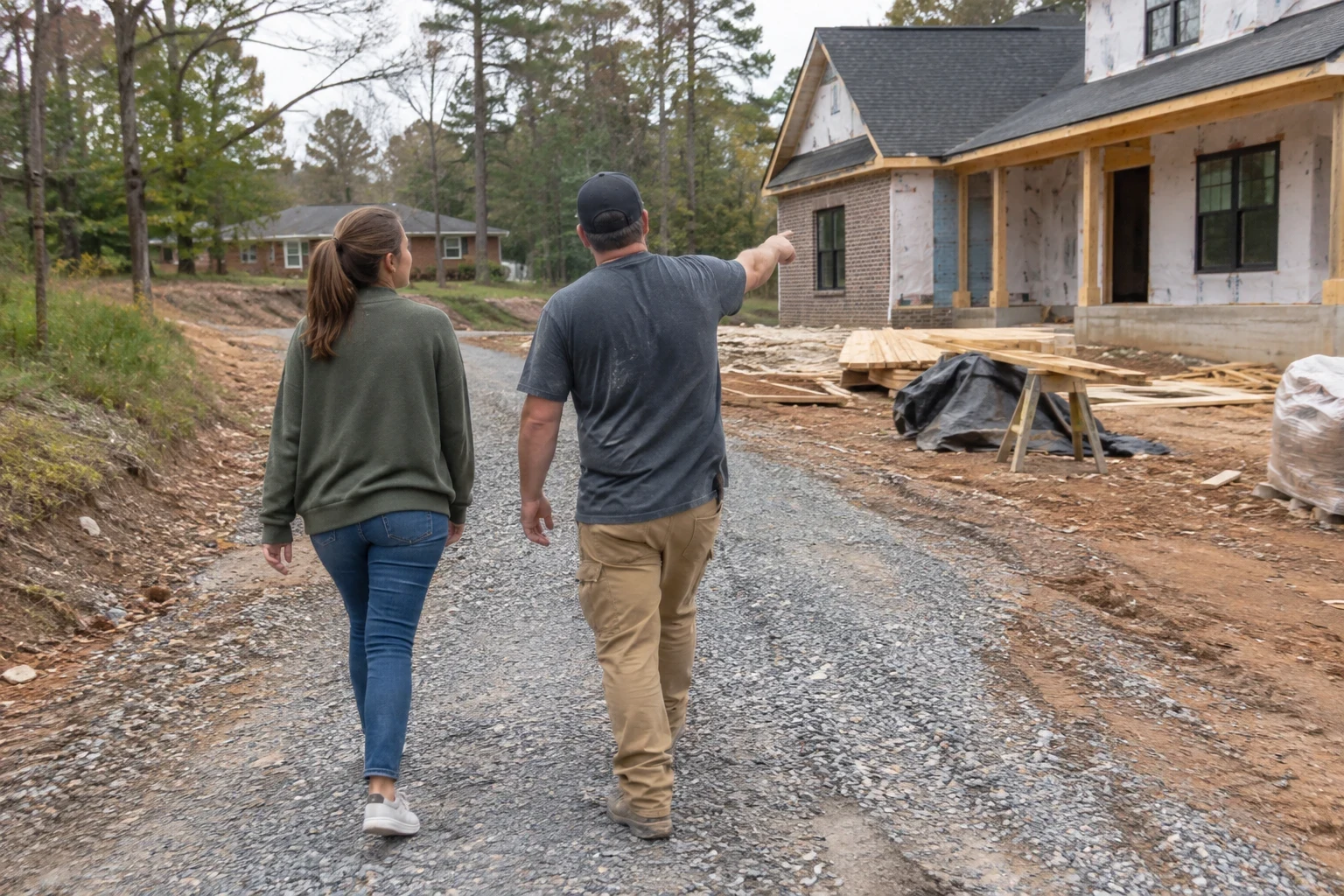
We cut swales, set the slope off the house and spread topsoil. Before we leave, we walk the lot with you and show you where water is meant to go.
What moves the cost of grading
Grading is priced by how much soil moves and how hard it is to move it. We look at the lot in person before giving a number, and we explain what each part of the price covers so you can see where the money goes.
- Volume of cut and fill
- A nearly level lot needs far less work than one with a steep fall across the building site. Balancing cut and fill on site costs less than trucking material in or out.
- Soil type and moisture
- Wet clay will not compact properly and has to dry or be reworked. Rock or old buried debris slows the machines down.
- Access for equipment
- Narrow side yards, fences or mature trees close to the work area may call for smaller machines and more hand work.
- Drainage features and permits
- Long swales, added erosion control and any required land disturbance permit add to the scope.
Grading questions we hear
What is the difference between rough grading and finish grading?
Rough grading sets the general elevations and builds the compacted pad before construction. Finish grading happens after the house is built and sets the final slope and topsoil layer. On a new custom home you need both, done at different stages.
Can you fix grading around a house that is already built?
Yes. We can rebuild the slope along the foundation, cut swales to redirect runoff and correct low spots. We keep finished soil below siding and below the bottom of any wood framing so the fix does not create a new moisture problem.
How long does grading take?
A small regrade around an existing home may take a day or two. A building pad on a sloped lot takes longer, and rain can stop work because soil that is too wet will not compact. We give you a realistic schedule at the consultation.
Do I need land clearing before grading?
On a wooded or overgrown lot, yes. Stumps and roots left in the ground rot and leave voids, so they come out first. We often handle land clearing and grading as one continuous job.
Why does compaction matter so much?
Loose fill keeps settling for years under its own weight and every rainfall. A foundation or slab on uncompacted fill can crack or shift as the soil underneath sinks. Compacting in thin lifts gets the settling done before anything is built on top.
Get the ground right before you build on it
Tell us about your lot and what you plan to put on it. We will talk through the slope, the soil and the drainage, and what the grading work should involve.