ServicesFlooring Installation
Flooring Installation in Spartanburg
Hardwood, engineered wood, luxury vinyl plank or tile: the material matters less than the base beneath it. Before any new flooring goes down, we check the subfloor for flatness, moisture and loose fasteners, so your floor stays tight, level and quiet long after the crew packs up.
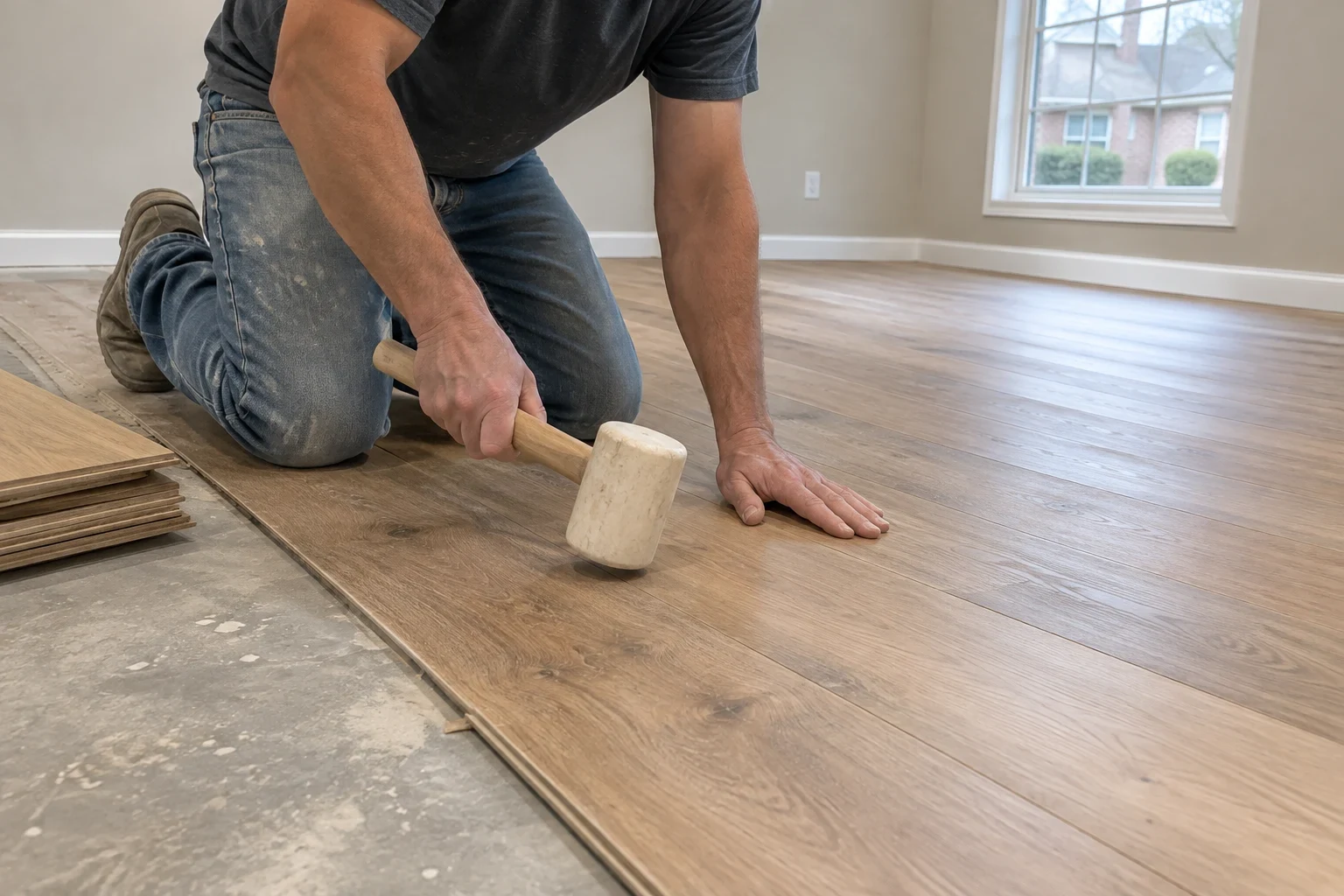
Why our flooring work starts below the surface
When we inspect a floor that has failed, the flooring is rarely the real culprit. Hardwood that cups usually has moisture rising into it from a crawlspace. Grout that cracks tends to sit on a subfloor flexing between joists. Vinyl plank with open seams was often clicked together over a dip nobody measured.
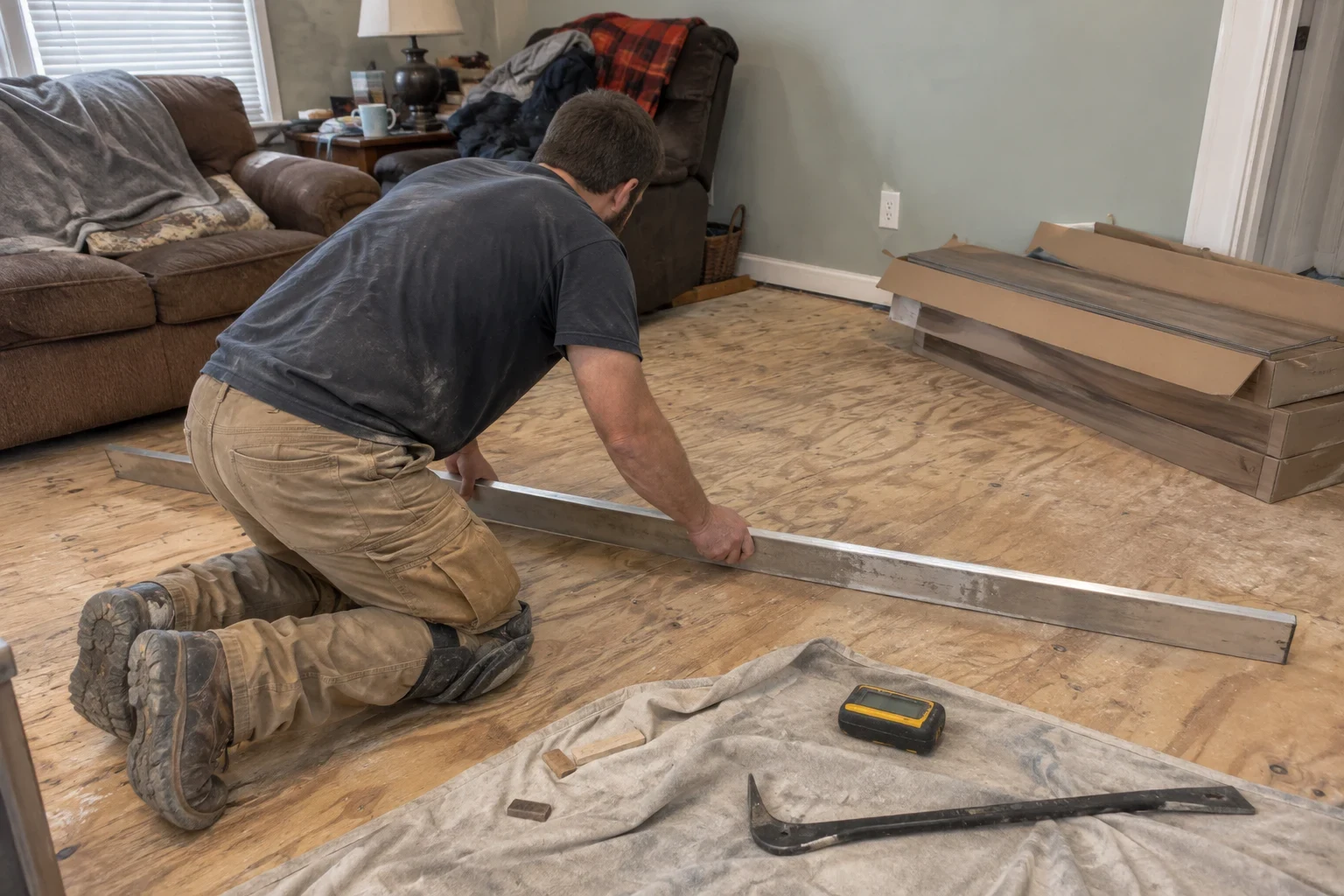
That is why we work from the bottom up. We check flatness with a straightedge, take moisture readings in both the subfloor and the new material, and re-fasten or replace sheathing that moves. Then we install to the manufacturer's spec, keeping the expansion gaps, joint stagger and transitions that separate a floor that lasts five years from one that lasts twenty-five.
Flooring can be its own project, one piece of a larger home remodeling job, or part of a new build through our custom home building work.
What our flooring work covers
- Removal and haul-off
- We pull up the old carpet, tack strip, vinyl or tile, scrape adhesive where needed and take the debris away. Staples and nails come out of the subfloor so nothing telegraphs through the new floor.
- Subfloor repair and leveling
- Loose plywood or OSB gets screwed down to the joists, which stops most squeaks at the source. Low spots get patched or leveled, and high seams get ground down. Water-damaged sheathing is cut out and replaced.
- Moisture testing
- We take meter readings of the subfloor and the new wood before installing. Wood laid over a damp subfloor will swell and cup once it reaches balance, so we wait or correct the moisture source first.
- Installation by material
- Nail-down and glue-down hardwood, floating engineered and luxury vinyl plank, and tile set in thinset over cement board or an uncoupling membrane. Each gets the underlayment and fastening schedule its manufacturer calls for.
- Trim and transitions
- We undercut door jambs so flooring slides beneath instead of being caulked around them, then set baseboard or shoe molding over the expansion gap. Transitions between rooms are matched to the height difference so there's no trip edge.
Signs it's time for new flooring
Squeaks and soft spots
A squeak usually means a subfloor panel has worked loose from a joist. A soft spot can mean rot underneath. Both should be fixed at the subfloor, not covered over.
Cupping or gaps in hardwood
Board edges that rise above the centers point to moisture from below. Wide gaps in winter that close in summer are normal to a degree, but large seasonal swings mean the floor wasn't acclimated or the house humidity runs to extremes.
Cracked tile or grout
Cracks that run in a line across several tiles often follow a subfloor seam or a joist that deflects too much. New tile over the same base will crack again.
Separating plank seams
Click-lock vinyl and laminate pull apart when laid over an uneven subfloor or pinned under cabinets so they can't float. Those seams let water and grit in.
Worn finish past refinishing
Solid hardwood can be sanded several times, but engineered wood has a thin wear layer. Once it's through, replacement is the honest answer.
What affects the cost of flooring installation
The flooring itself is only part of the price. Labor, prep and the condition of the subfloor often move the number more than the material you pick. We explain each line during your consultation so you know what you're paying for before work starts.
Material and installation method
Nail-down solid hardwood and tile take more labor per square foot than floating plank. Patterns like herringbone or diagonal layouts add cutting time and waste.
Subfloor condition
A flat, dry subfloor needs little prep. Rotted sheathing, heavy leveling or moisture problems in the crawlspace add work that has to happen first.
Removal of existing flooring
Carpet comes up quickly. Glued-down tile or vinyl over old adhesive takes far longer to remove and clean off.
Room layout and stairs
Many small rooms, closets and doorways mean more cuts and transitions than one open area. Stair treads and nosings are priced as separate work.
How a flooring job runs
- 1
Consultation and measurement
We walk the rooms with you, measure square footage, check subfloor condition and talk through which materials suit each space. Kitchens, baths and laundry rooms usually get a water-resistant product; living areas have more options.
- 2
Material delivery and acclimation
Wood flooring is delivered and stored in the rooms where it will go, with the heat or air running, until its moisture reading is close to the subfloor's. Some vinyl products also ask for a short acclimation period, and we follow it.
- 3
Tear-out and subfloor prep
We remove old flooring, fix loose or damaged sheathing, and level the surface to the tolerance the new material requires. This is the day that decides how the floor will perform.
- 4
Installation and trim
We lay out from a straight reference line, stagger end joints so they don't line up, keep the expansion gap at the walls and finish with trim and transitions. Then we clean up and walk the floor with you before we leave.
Flooring installation questions
Can you install new flooring over my existing floor?
Sometimes. Floating vinyl plank can go over sheet vinyl or tile that is flat and still firmly stuck down. We won't install over carpet, over a floor that moves, or anywhere the added height would bind doors or create a step at the transition. We'll tell you which applies after we look.
How long does hardwood need to acclimate?
It depends on the product and the conditions, not a fixed number of days. We go by moisture readings and install once the wood is within the range its manufacturer specifies relative to the subfloor. In a humid Spartanburg summer that can take longer than it would in winter.
Which flooring holds up best in a kitchen or bathroom?
Tile and quality luxury vinyl plank both handle water well. Tile is harder and lasts longer but needs a stiff subfloor to avoid cracking. Hardwood can work in a kitchen, but standing water at the sink or dishwasher will damage it over time.
Do I need to move my furniture?
Clearing small items, electronics and anything fragile helps. We'll go over who moves the larger pieces during your consultation so the plan is clear before the crew arrives.
What happens if you find damage under the old floor?
We stop, show you what we found and explain the repair before doing it. Water-damaged sheathing or a joist problem gets fixed properly, and if it points to something structural, our foundation work team can look at it.
Planning new floors?
Tell us which rooms, how they're used and what's down there now. We'll talk through materials, subfloor prep and what the job involves.