ServicesLand Clearing
Land Clearing in Spartanburg
We clear building lots the way a foundation needs them: trees down, stumps and root mats pulled from under the footprint, topsoil set aside, and the trees you want to keep protected. The site is ready for grading, not just cleared.
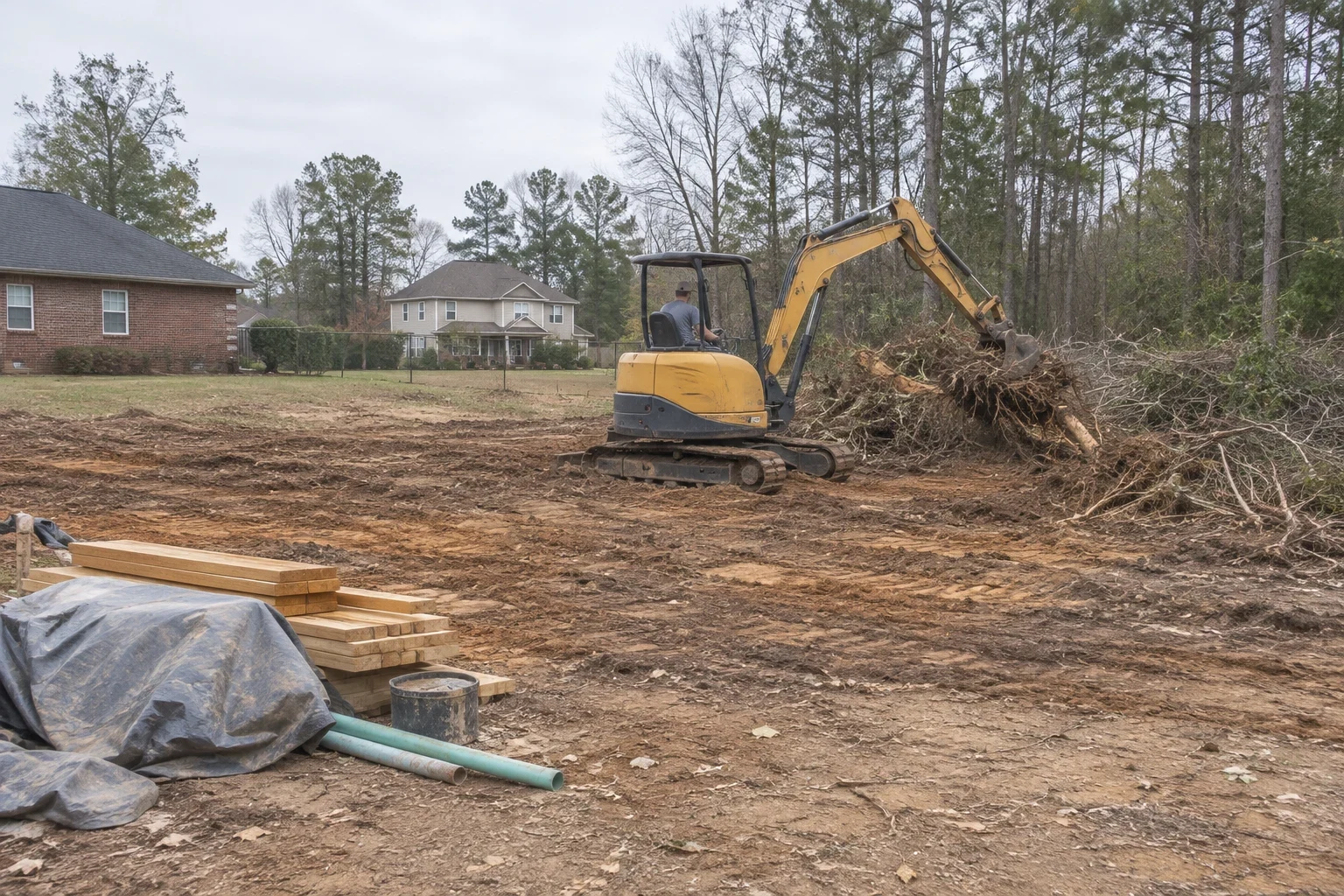
Clearing that thinks about what gets built next
Land clearing is the first work on a new lot, and it decides more than most people expect. A stump cut flush and left in the ground looks clean on day one. Under a slab or a footing it slowly rots, the soil above it sinks, and you get a cracked floor or a stepped crack in the block years later.
So we treat clearing as foundation prep. Inside the house footprint and a working margin around it, we remove stumps and the main root ball, then rake out the root mat and organic topsoil until we reach firm mineral soil. In most of the Upstate that means the red clay subsoil, which compacts well once the organics are gone.
Outside that zone, we clear only what the driveway, septic area, drainage and construction access actually need. Trees you want to keep get a fenced root zone before any machine moves.
What our land clearing covers
- Tree removal and felling
- We drop trees in a planned direction, away from the trees you are keeping, power lines and neighboring property. Usable logs can be cut and stacked for you if you want them.
- Full stump and root extraction
- Under the house, garage and driveway we pull stumps out with the root ball instead of grinding them. Grinding leaves the deeper roots, and those decay into voids that settle later.
- Topsoil stripping and stockpiling
- Dark organic topsoil does not belong under a foundation, but it is valuable for the yard. We strip it and stockpile it on the lot so it can be spread back during final grading.
- Underbrush and vine removal
- Privet, briars and vine-covered thickets come out by the roots so they do not sprout back up through freshly placed soil during the first growing season.
- Debris handling
- Brush and wood are hauled off, mulched on site or disposed of under local burn rules, depending on the lot and what you prefer. Nothing organic gets buried in the build area.
- Erosion control at the edges
- Bare clay sheds sediment fast in a summer thunderstorm. We set silt fence along the downhill side and keep a stabilized entrance so mud stays on your lot and off the road.
Signs your lot needs clearing before anything else
You can't walk the house site
If brush is too thick to stake corners or see the slope, the builder and surveyor can't lay out the footprint accurately. Clearing comes first.
Old stumps sit where the house will go
A previous logging cut often leaves stumps that look harmless. Each one is a future soft spot under a footing unless it is fully removed.
Trees lean toward the planned house
A tall pine or oak leaning over the future roofline is a risk to the build and to the finished home. It is cheaper to take it now than with a crane later.
Grading or septic work is next
Excavators and perc testers need open ground. If your next step is grading or a septic layout, the lot has to be cleared to that footprint first.
Buried debris or old fill
Lumps, sunken spots or trash in the soil can mean old stumps or debris were pushed in and covered. We dig these out so they don't end up under your foundation.
How a clearing job runs
- 1
Walk the lot and mark it
We walk the property with you, flag the house footprint, driveway and work area, and mark keeper trees. Utility locates are requested through SC811 before any digging.
- 2
Protect what stays
Tree protection fencing goes up at or beyond the drip line of each keeper tree, and silt fence goes in on the low side. Machines stay out of fenced areas so roots are not crushed.
- 3
Cut, then pull stumps
Trees come down first, then stumps and root balls are extracted from the build zone. Holes are backfilled and compacted in lifts with clean soil so no soft pockets are left behind.
- 4
Strip, stockpile and clean up
We strip organic topsoil to firm subsoil, stockpile it, and haul or mulch the debris. You get a level, open site ready for grading and layout.
What moves the cost of land clearing
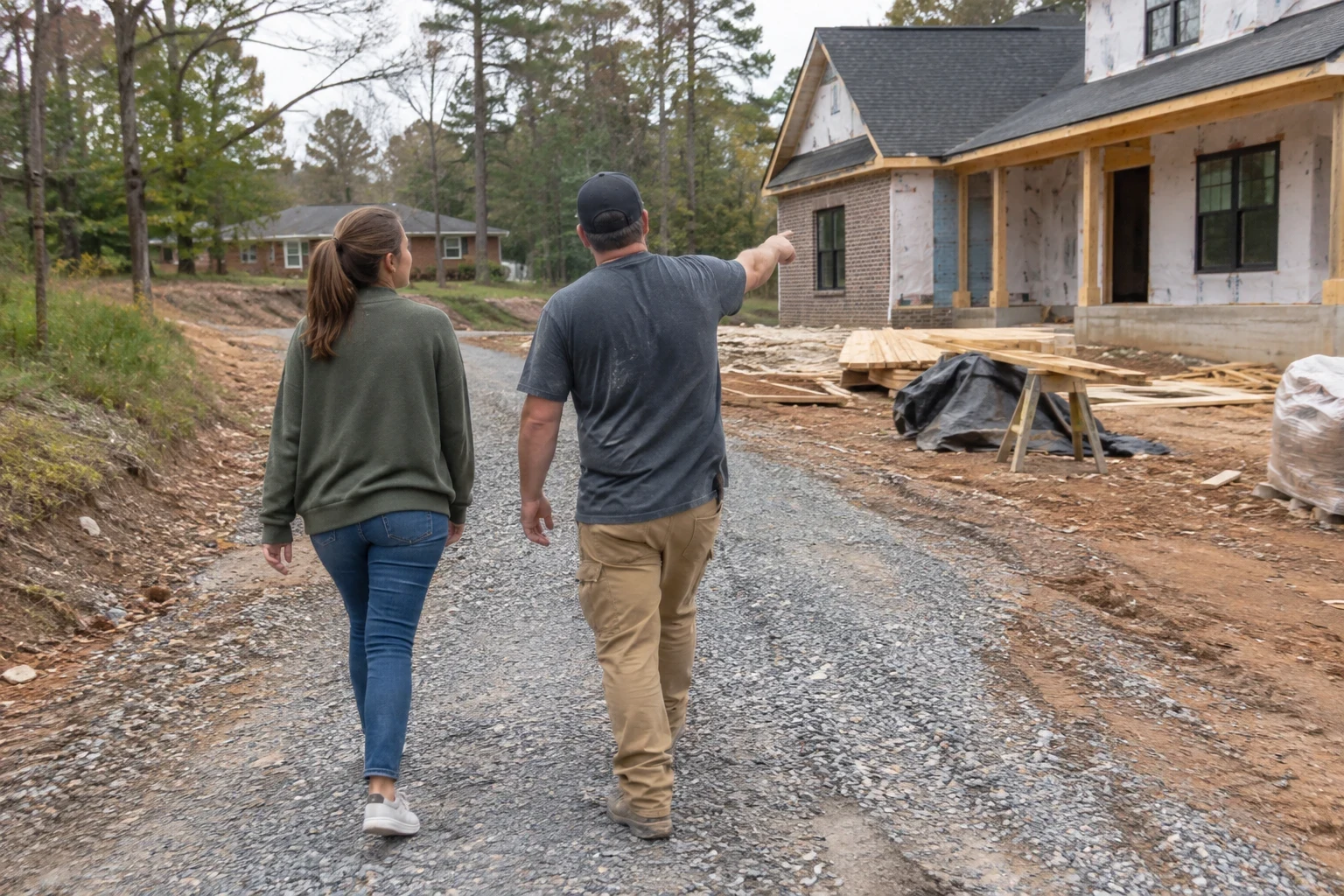
Clearing is priced by the work the lot actually holds, not a flat rate per acre. Two half-acre lots can differ a great deal depending on what is growing on them and what is buried. We walk the lot and explain the cost drivers during your consultation.
- Tree size and density
- A stand of mature hardwoods takes far more cutting, hauling and stump work than young pines or brush. Trunk diameter matters more than tree count.
- Stump removal versus grinding
- Full extraction under the build area takes more machine time than grinding, plus backfill and compaction. We grind only where nothing will be built.
- Debris disposal method
- Hauling off, mulching on site and burning each carry different costs, and not every lot or season allows burning.
- Slope and access
- Steep ground, soft soil after rain or a narrow entrance slows equipment and may call for smaller machines.
- Erosion control and permits
- Larger disturbed areas usually need a stormwater permit and more silt fence, which adds materials and inspection time.
Land clearing questions
Something not covered here? (864) 400-5195
Can you leave some trees on the lot?
Yes, and we plan for it from the first walk. Keeper trees get protection fencing around their root zone, because most damage comes from equipment compacting roots, not from the saw. Trees right against the footprint are often stressed by excavation anyway, so we will tell you honestly which ones are likely to survive.
Why not just grind the stumps under the house?
Grinding takes the stump top down a few inches below grade but leaves the main roots in place. As those roots decay over several years they leave voids, and the soil above them settles. Under a slab or footing, that settlement shows up as cracks, so we pull the roots out instead.
What happens to the topsoil?
We strip it from the build area and pile it on your lot. It is too soft and organic to build on, but it is the best material for your lawn and beds, so it goes back down during final grading.
Do I need a permit to clear my land?
That comes down to the size of the area we disturb and the lot's location. A modest residential clearing usually needs no permit beyond the building permit, while bigger disturbances generally call for a stormwater permit and an erosion control plan. We confirm what your lot requires before any machine starts.
How long does clearing take?
A typical residential lot is usually a matter of days rather than weeks, but tree size, stump count and wet weather all change that. Clay gets slick after heavy rain, and we wait it out instead of rutting your site.
Can the same crew handle grading and the foundation?
Yes. We also do grading and foundation work, so the clearing is done to the depth and footprint those next steps need, with no gaps between crews.
Start your lot off on solid ground
Tell us about your property and what you plan to build. We will talk through the trees, the stumps and the next steps toward grading and your foundation.